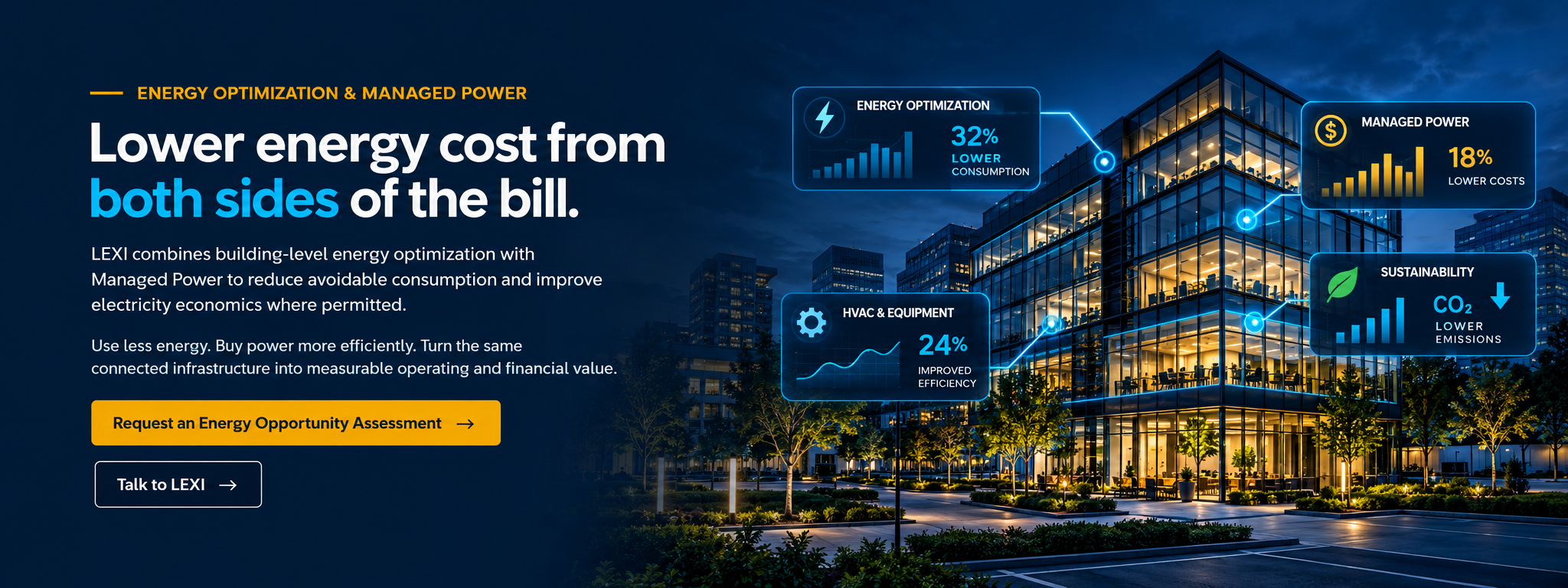
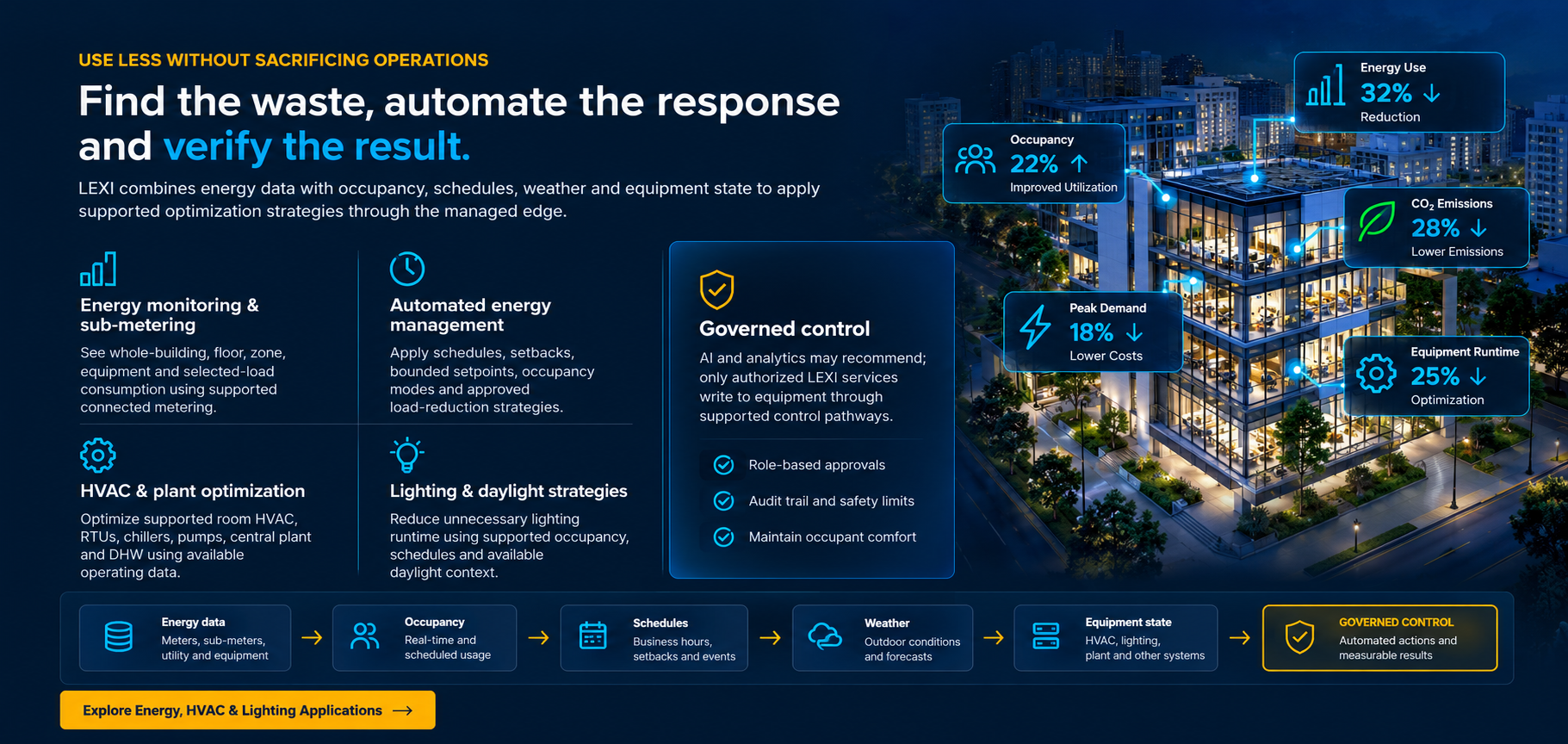
Energy optimization & managed power — lower energy cost from both sides of the bill. LEXI combines building-level energy optimization with Managed Power to reduce avoidable consumption and improve electricity economics where permitted. Use less energy. Buy power more efficiently. Turn the same connected infrastructure into measurable operating and financial value. Energy optimization delivers 32% lower consumption, HVAC & equipment 24% improved efficiency, Managed Power 18% lower costs, and sustainability lower CO2 emissions.
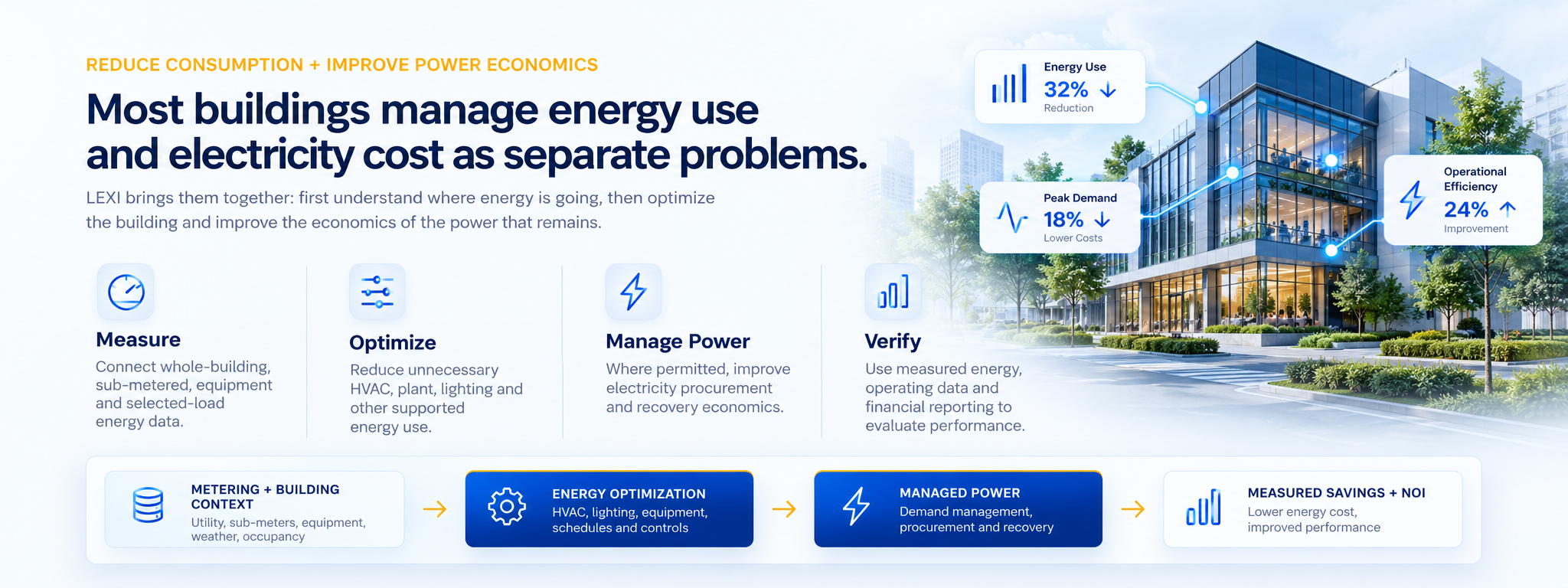
Reduce consumption + improve power economics — most buildings manage energy use and electricity cost as separate problems. LEXI brings them together: first understand where energy is going, then optimize the building and improve the economics of the power that remains. Measure: connect whole-building, sub-metered, equipment and selected-load energy data. Optimize: reduce unnecessary HVAC, plant, lighting and other supported energy use. Manage Power: where permitted, improve electricity procurement and recovery economics. Verify: use measured energy, operating data and financial reporting to evaluate performance. Flow: metering + building context to energy optimization to managed power to measured savings + NOI.
Use less without sacrificing operations — find the waste, automate the response and verify the result. LEXI combines energy data with occupancy, schedules, weather and equipment state to apply supported optimization strategies through the managed edge. Energy monitoring & sub-metering: see whole-building, floor, zone, equipment and selected-load consumption using supported connected metering. Automated energy management: apply schedules, setbacks, bounded setpoints, occupancy modes and approved load-reduction strategies. HVAC & plant optimization: optimize supported room HVAC, RTUs, chillers, pumps, central plant and DHW using available operating data. Lighting & daylight strategies: reduce unnecessary lighting runtime using supported occupancy, schedules and available daylight context. Governed control: AI and analytics may recommend; only authorized LEXI services write to equipment through supported control pathways, with role-based approvals, audit trail and safety limits, and maintained occupant comfort. Flow: energy data, occupancy, schedules, weather and equipment state to governed control.
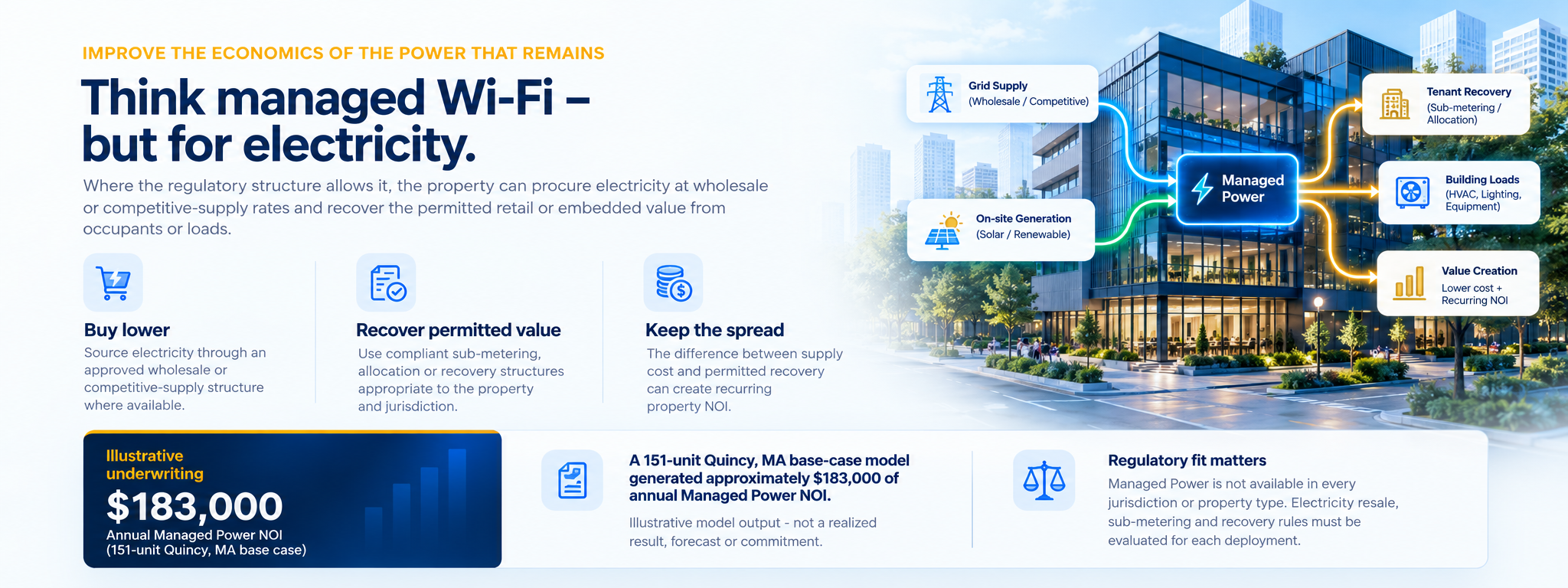
Improve the economics of the power that remains — think managed Wi-Fi, but for electricity. Where the regulatory structure allows it, the property can procure electricity at wholesale or competitive-supply rates and recover the permitted retail or embedded value from occupants or loads. Buy lower: source electricity through an approved wholesale or competitive-supply structure where available. Recover permitted value: use compliant sub-metering, allocation or recovery structures appropriate to the property and jurisdiction. Keep the spread: the difference between supply cost and permitted recovery can create recurring property NOI. Illustrative underwriting: a 151-unit Quincy, MA base-case model generated approximately $183,000 of annual Managed Power NOI (illustrative model output, not a realized result, forecast or commitment). Regulatory fit matters: Managed Power is not available in every jurisdiction or property type; electricity resale, sub-metering and recovery rules must be evaluated for each deployment.
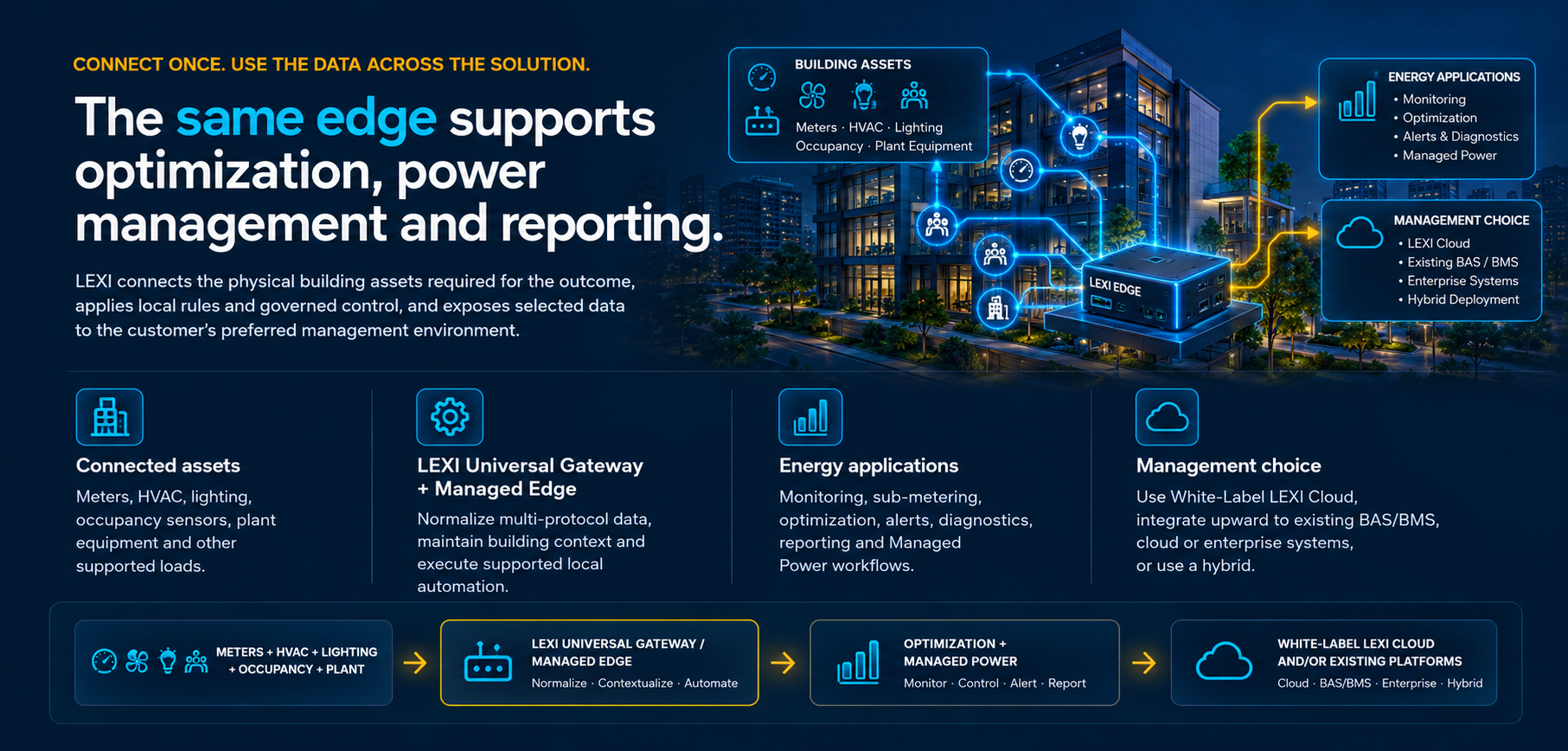
Connect once, use the data across the solution — the same edge supports optimization, power management and reporting. LEXI connects the physical building assets required for the outcome, applies local rules and governed control, and exposes selected data to the customer's preferred management environment. Connected assets: meters, HVAC, lighting, occupancy sensors, plant equipment and other supported loads. LEXI Universal Gateway + Managed Edge: normalize multi-protocol data, maintain building context and execute supported local automation. Energy applications: monitoring, sub-metering, optimization, alerts, diagnostics, reporting and Managed Power workflows. Management choice: use White-Label LEXI Cloud, integrate upward to existing BAS/BMS, cloud or enterprise systems, or use a hybrid. Flow: meters, HVAC, lighting, occupancy and plant to the LEXI Universal Gateway / Managed Edge to optimization and Managed Power to White-Label LEXI Cloud and/or existing platforms.
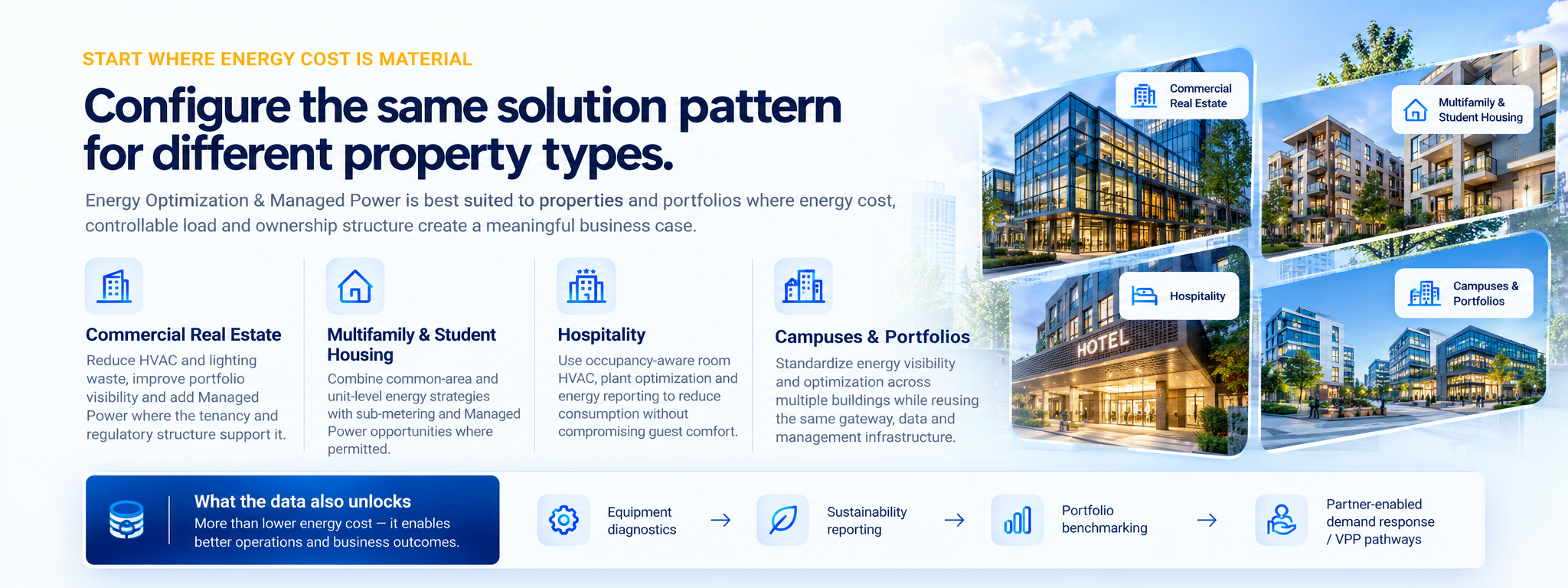
Start where energy cost is material — configure the same solution pattern for different property types. Energy Optimization & Managed Power is best suited to properties and portfolios where energy cost, controllable load and ownership structure create a meaningful business case. Commercial Real Estate: reduce HVAC and lighting waste, improve portfolio visibility and add Managed Power where the tenancy and regulatory structure support it. Multifamily & Student Housing: combine common-area and unit-level energy strategies with sub-metering and Managed Power opportunities where permitted. Hospitality: use occupancy-aware room HVAC, plant optimization and energy reporting to reduce consumption without compromising guest comfort. Campuses & Portfolios: standardize energy visibility and optimization across multiple buildings while reusing the same gateway, data and management infrastructure. What the data also unlocks: equipment diagnostics, sustainability reporting, portfolio benchmarking and selected partner-enabled demand-response / VPP pathways.
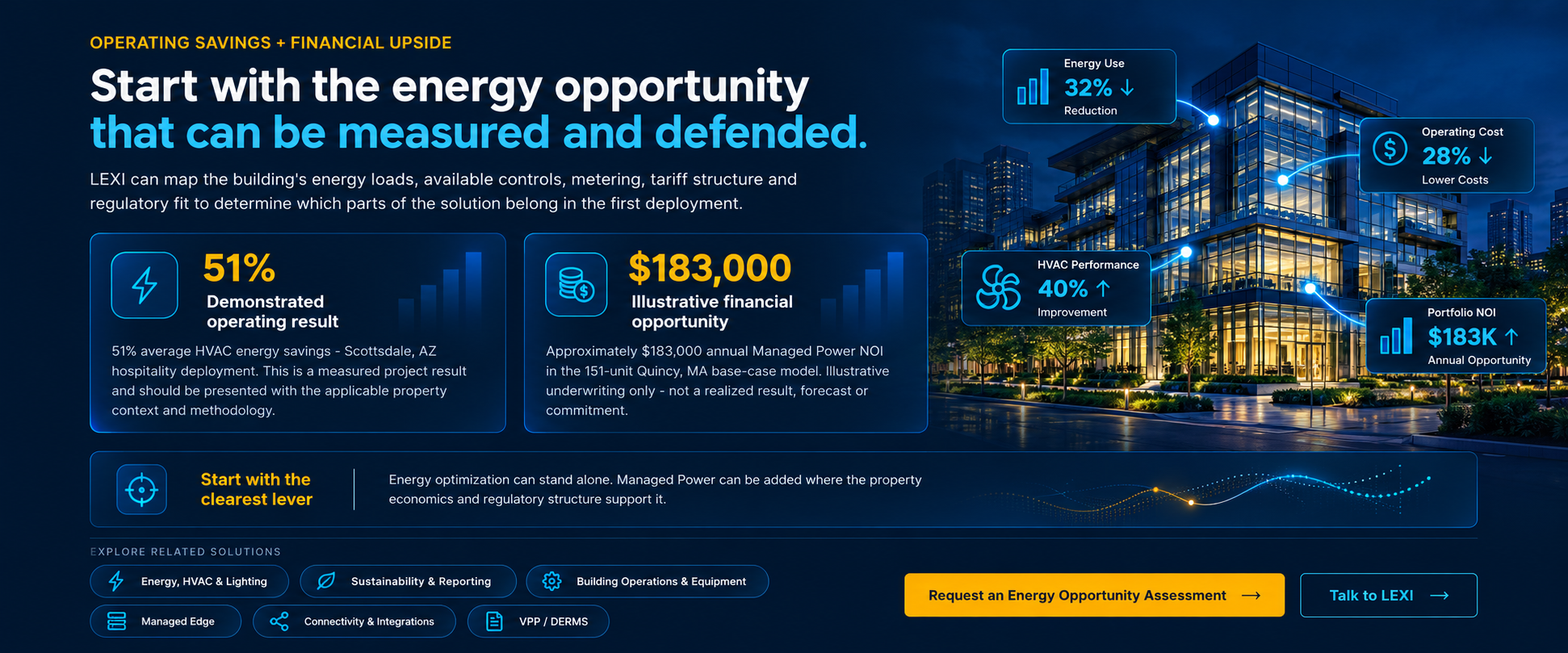
Operating savings + financial upside — start with the energy opportunity that can be measured and defended. LEXI can map the building's energy loads, available controls, metering, tariff structure and regulatory fit to determine which parts of the solution belong in the first deployment. Demonstrated operating result: 51% average HVAC energy savings — Scottsdale, AZ hospitality deployment (a measured project result, to be presented with the applicable property context and methodology). Illustrative financial opportunity: approximately $183,000 annual Managed Power NOI in the 151-unit Quincy, MA base-case model (illustrative underwriting only, not a realized result, forecast or commitment). Start with the clearest lever: energy optimization can stand alone, and Managed Power can be added where the property economics and regulatory structure support it. Explore related solutions: Energy, HVAC & Lighting; Sustainability & Reporting; Building Operations & Equipment; Managed Edge; Connectivity & Integrations; and VPP / DERMS.