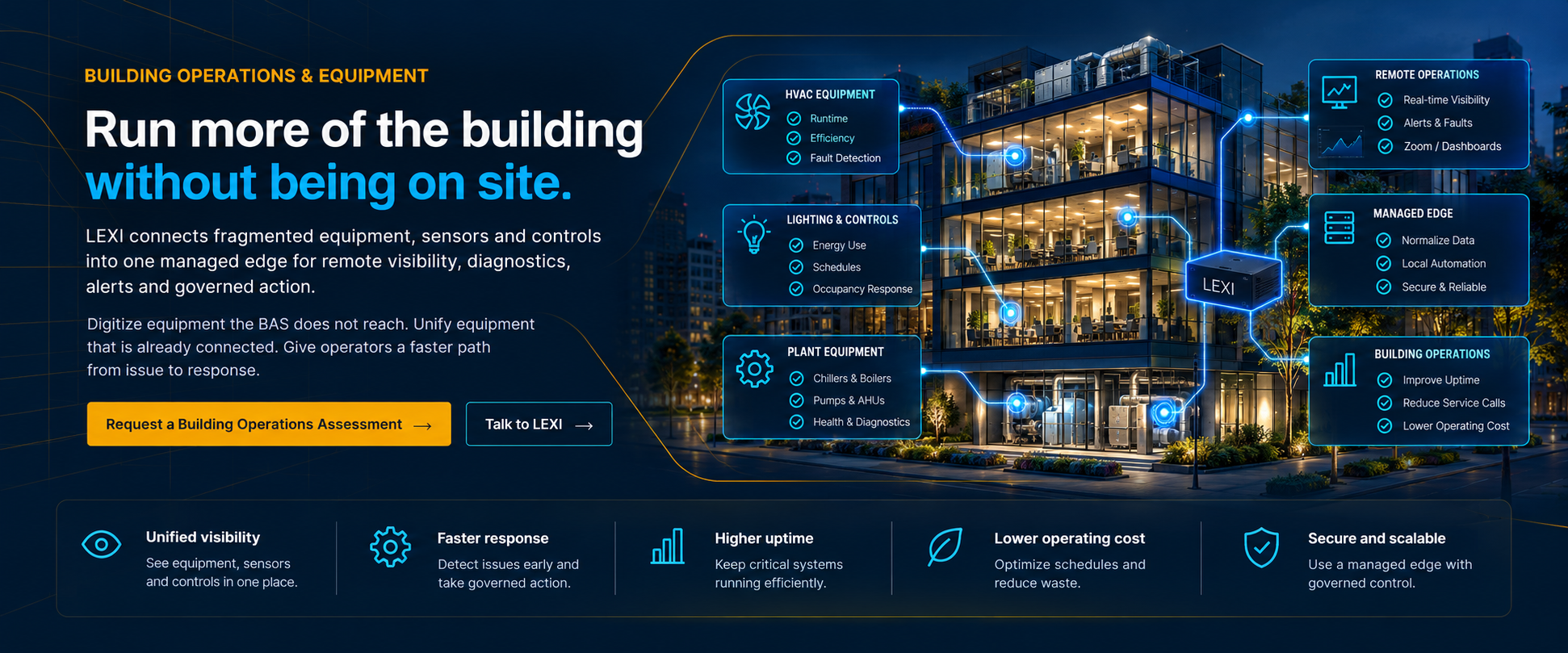
Building operations & equipment — run more of the building without being on site. LEXI connects fragmented equipment, sensors and controls into one managed edge for remote visibility, diagnostics, alerts and governed action. Digitize equipment the BAS does not reach. Unify equipment that is already connected. Give operators a faster path from issue to response. HVAC equipment, lighting & controls and plant equipment connect through the LEXI managed edge to remote operations, building operations and management, delivering unified visibility, faster response, higher uptime, lower operating cost and secure, scalable governed control.
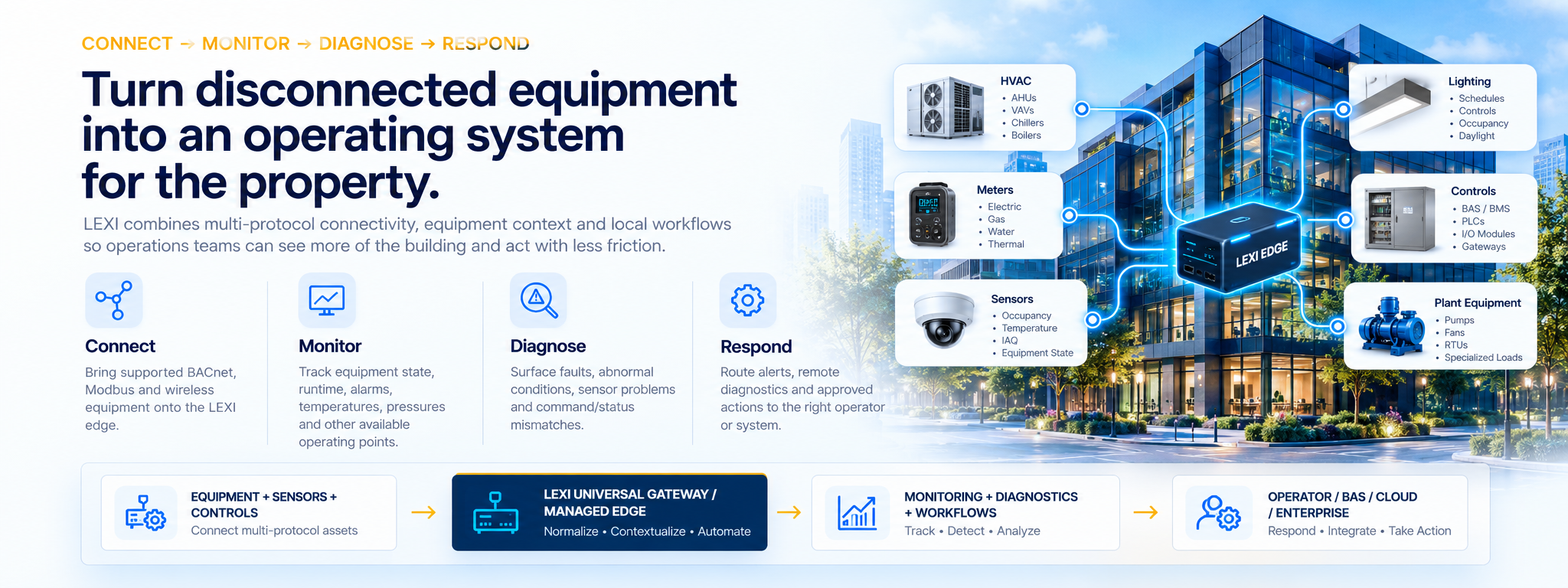
Connect, monitor, diagnose, respond — turn disconnected equipment into an operating system for the property. LEXI combines multi-protocol connectivity, equipment context and local workflows so operations teams can see more of the building and act with less friction. Connect: bring supported BACnet, Modbus and wireless equipment onto the LEXI edge. Monitor: track equipment state, runtime, alarms, temperatures, pressures and other available operating points. Diagnose: surface faults, abnormal conditions, sensor problems and command/status mismatches. Respond: route alerts, remote diagnostics and approved actions to the right operator or system. Flow: equipment, sensors and controls to the LEXI Universal Gateway / Managed Edge to monitoring, diagnostics and workflows to operator, BAS, cloud or enterprise.
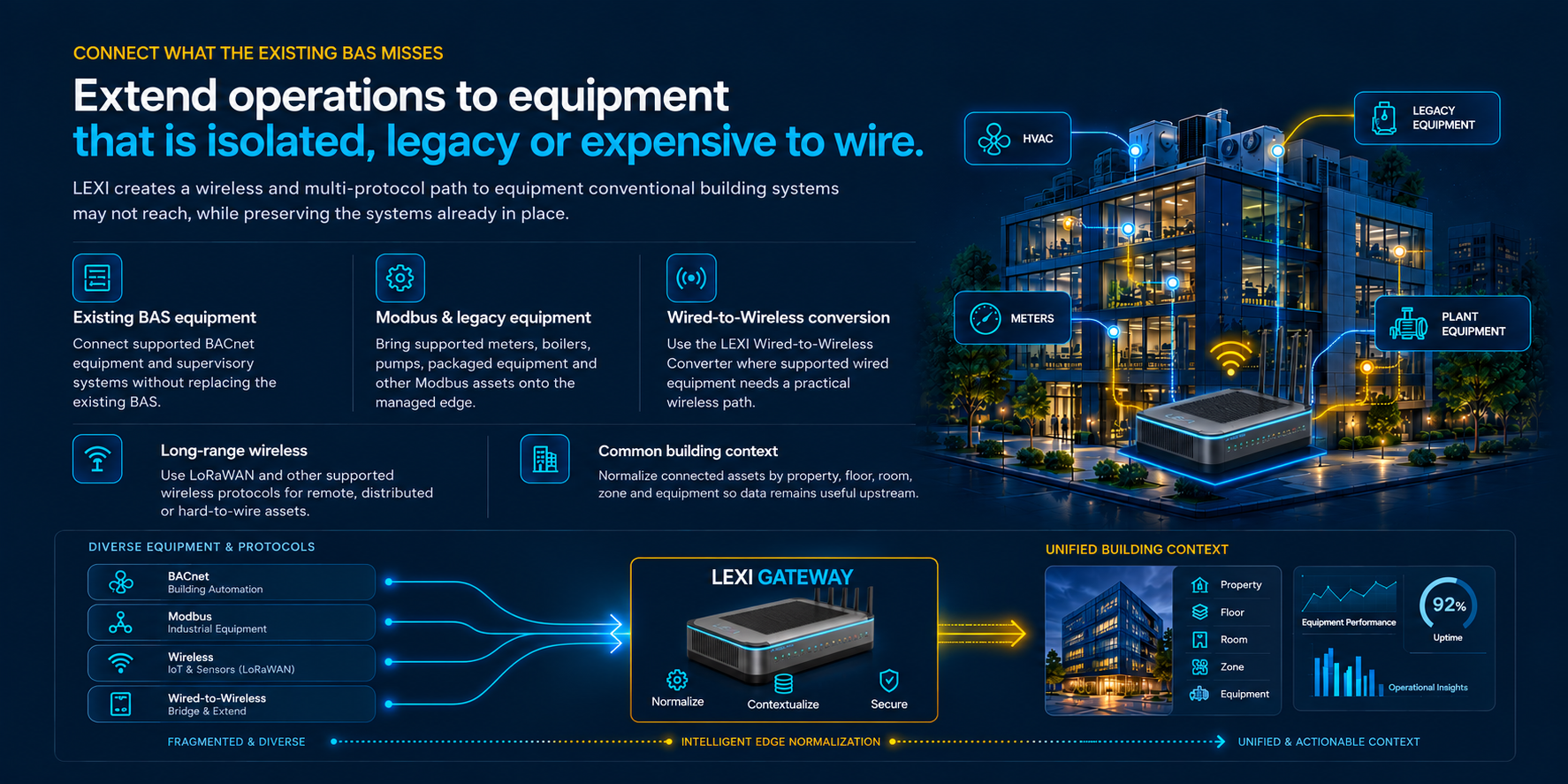
Connect what the existing BAS misses — extend operations to equipment that is isolated, legacy or expensive to wire. LEXI creates a wireless and multi-protocol path to equipment conventional building systems may not reach, while preserving the systems already in place. Existing BAS equipment: connect supported BACnet equipment and supervisory systems without replacing the existing BAS. Modbus & legacy equipment: bring supported meters, boilers, pumps, packaged equipment and other Modbus assets onto the managed edge. Wired-to-Wireless conversion: use the LEXI Wired-to-Wireless Converter where supported wired equipment needs a practical wireless path. Long-range wireless: use LoRaWAN and other supported wireless protocols for remote, distributed or hard-to-wire assets. Common building context: normalize connected assets by property, floor, room, zone and equipment so data remains useful upstream. Flow: diverse equipment and protocols (BACnet, Modbus, wireless, wired-to-wireless) to the LEXI Gateway (normalize, contextualize, secure) to unified, actionable building context.
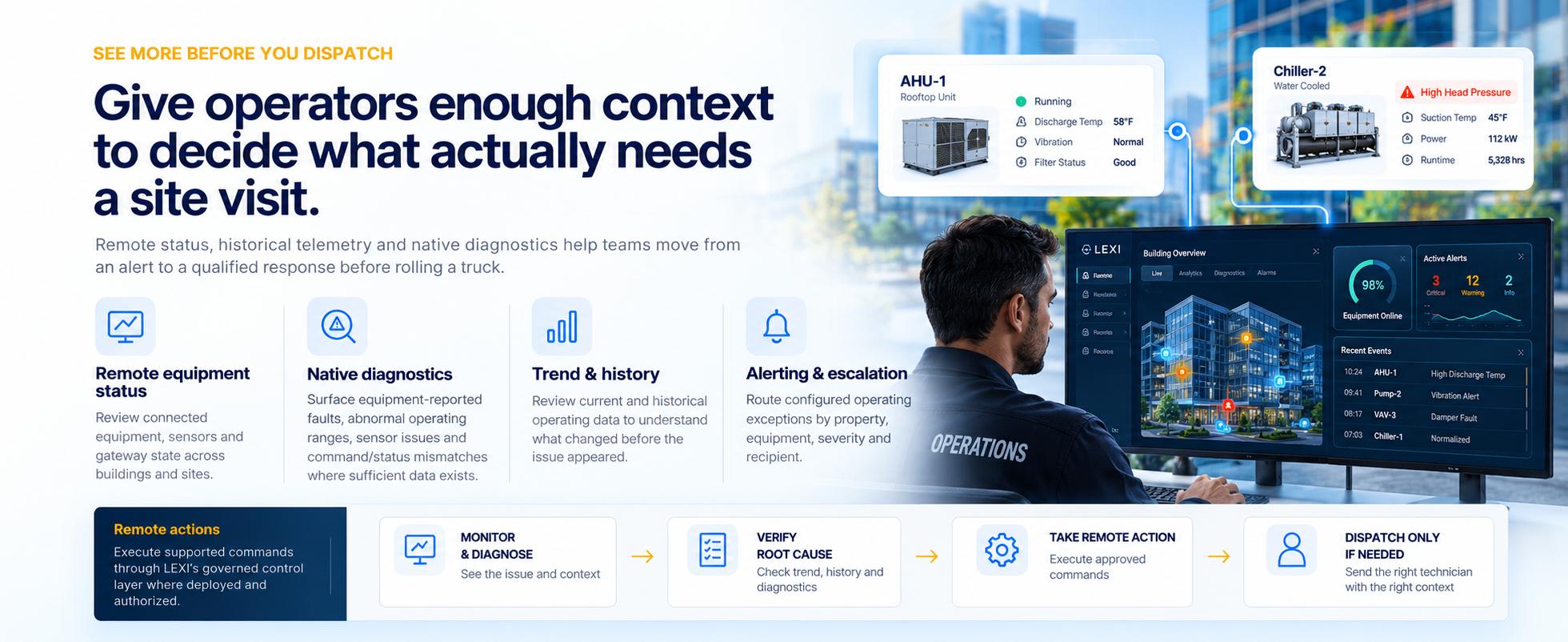
See more before you dispatch — give operators enough context to decide what actually needs a site visit. Remote status, historical telemetry and native diagnostics help teams move from an alert to a qualified response before rolling a truck. Remote equipment status: review connected equipment, sensors and gateway state across buildings and sites. Native diagnostics: surface equipment-reported faults, abnormal operating ranges, sensor issues and command/status mismatches where sufficient data exists. Trend & history: review current and historical operating data to understand what changed before the issue appeared. Alerting & escalation: route configured operating exceptions by property, equipment, severity and recipient. Remote actions: execute supported commands through LEXI's governed control layer where deployed and authorized. Flow: monitor & diagnose, verify root cause, take remote action, and dispatch only if needed.
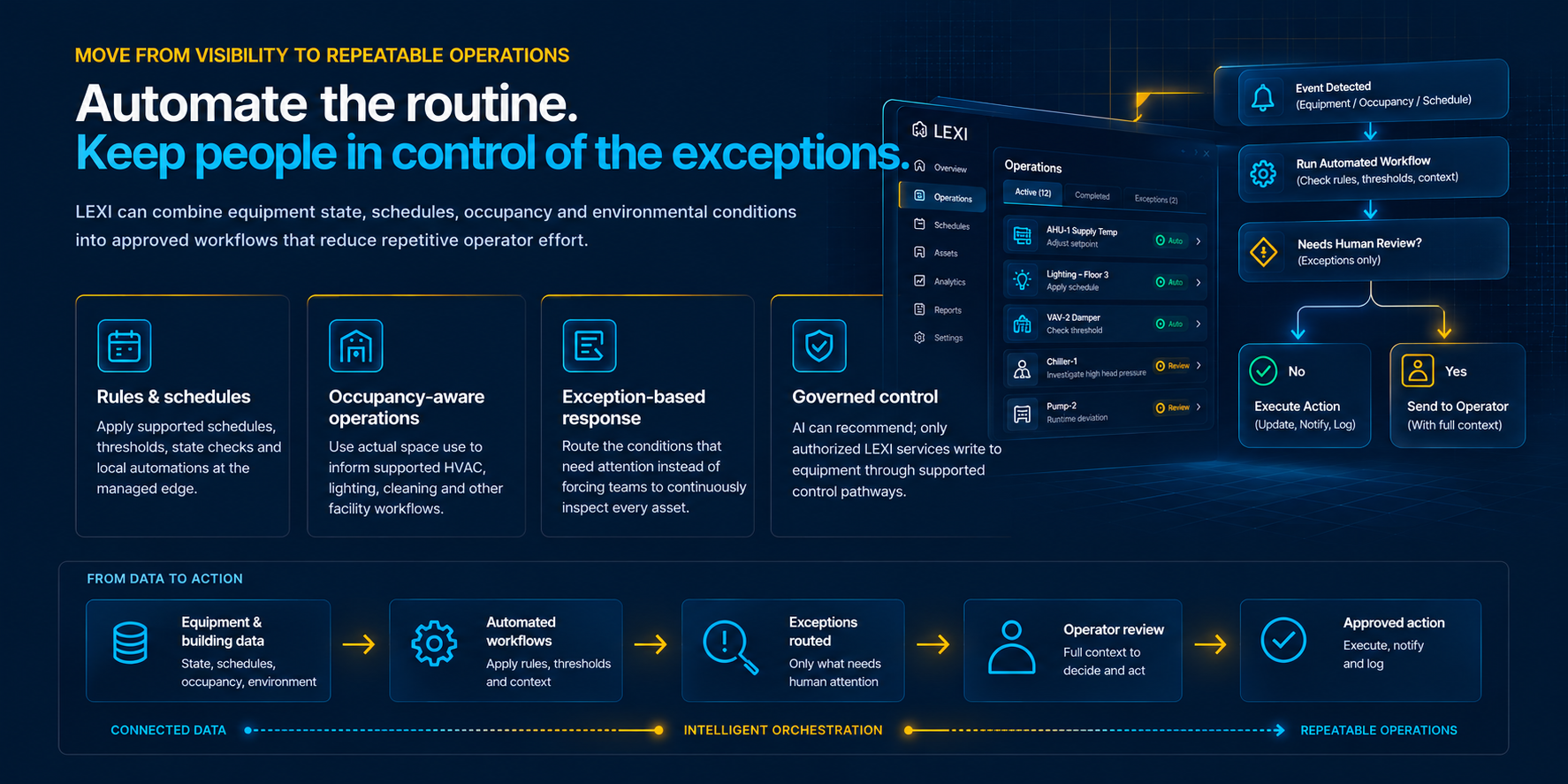
Move from visibility to repeatable operations — automate the routine, keep people in control of the exceptions. LEXI can combine equipment state, schedules, occupancy and environmental conditions into approved workflows that reduce repetitive operator effort. Rules & schedules: apply supported schedules, thresholds, state checks and local automations at the managed edge. Occupancy-aware operations: use actual space use to inform supported HVAC, lighting, cleaning and other facility workflows. Exception-based response: route the conditions that need attention instead of forcing teams to continuously inspect every asset. Governed control: AI can recommend; only authorized LEXI services write to equipment through supported control pathways. From data to action: equipment & building data to automated workflows to exceptions routed to operator review to approved action; an event is detected, an automated workflow runs, and if human review is needed it is sent to the operator, otherwise the action is executed. Flexible management: use White-Label LEXI Cloud, integrate upward to existing BAS/BMS, cloud or enterprise systems, or use a hybrid.
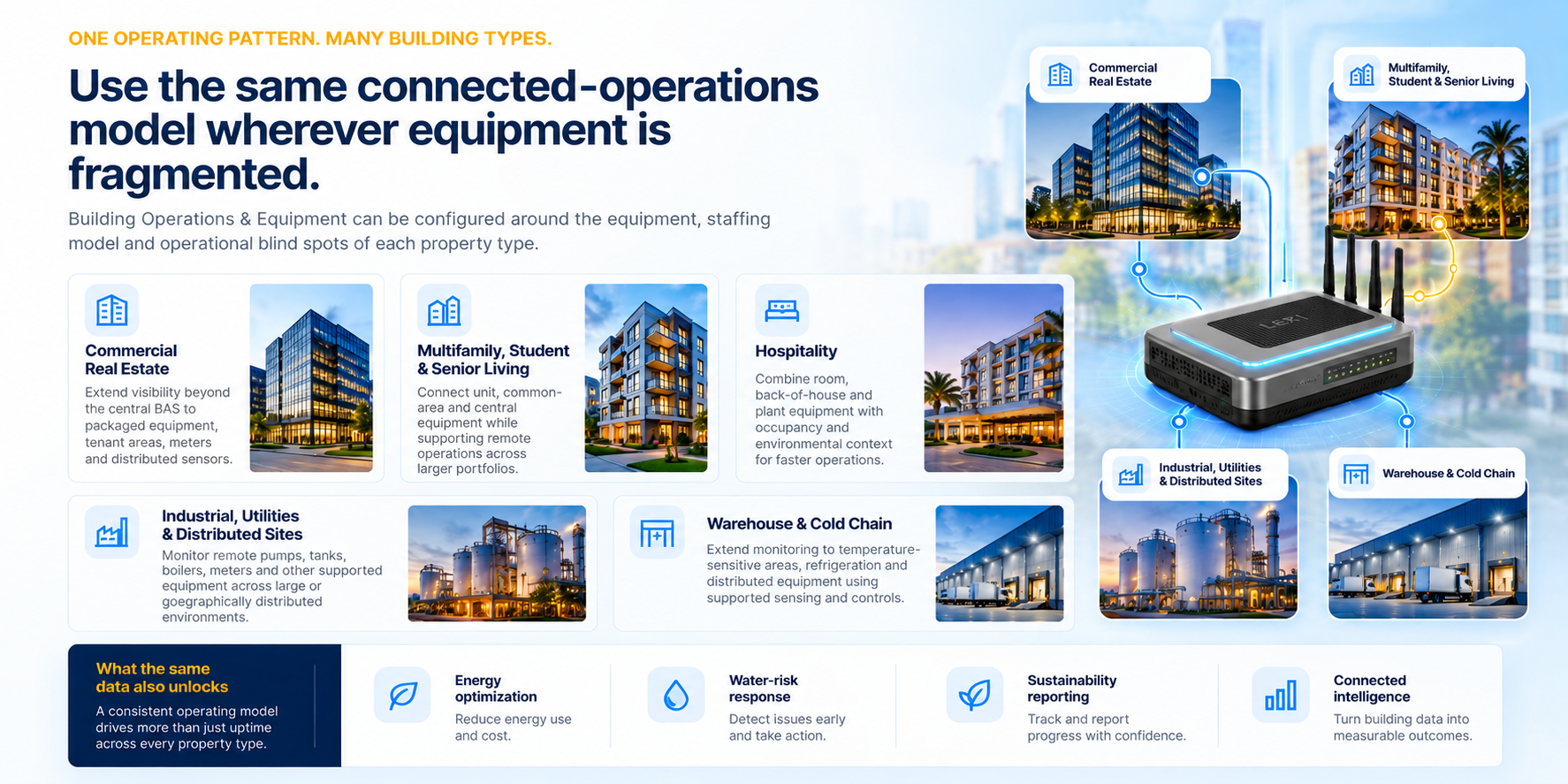
One operating pattern, many building types — use the same connected-operations model wherever equipment is fragmented. Building Operations & Equipment can be configured around the equipment, staffing model and operational blind spots of each property type. Commercial Real Estate: extend visibility beyond the central BAS to packaged equipment, tenant areas, meters and distributed sensors. Multifamily, Student & Senior Living: connect unit, common-area and central equipment while supporting remote operations across larger portfolios. Hospitality: combine room, back-of-house and plant equipment with occupancy and environmental context for faster operations. Industrial, Utilities & Distributed Sites: monitor remote pumps, tanks, boilers, meters and other supported equipment across large or geographically distributed environments. Warehouse & Cold Chain: extend monitoring to temperature-sensitive areas, refrigeration and distributed equipment using supported sensing and controls. What the same data also unlocks: energy optimization, facility-use workflows, water-risk response, sustainability reporting and connected intelligence.
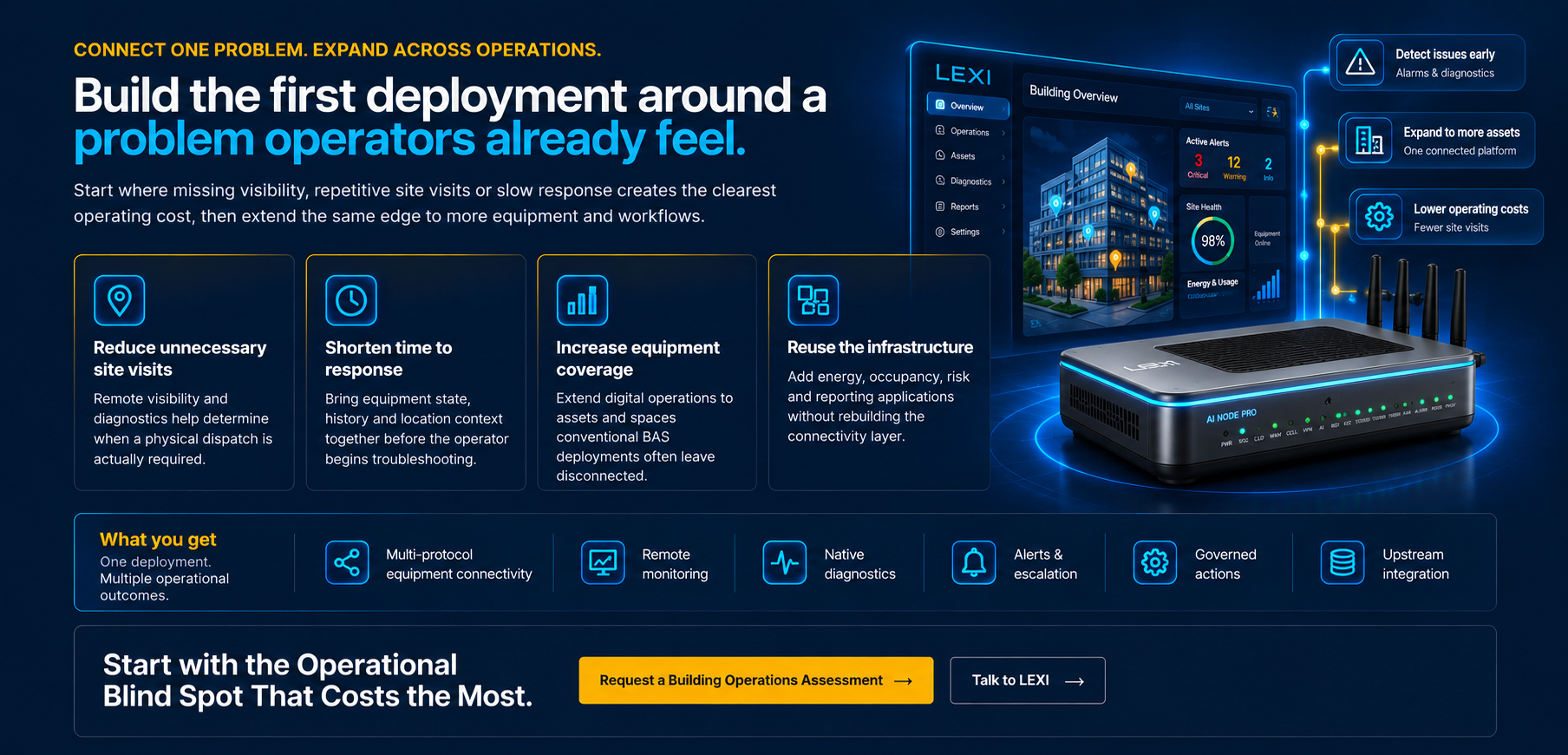
Connect one problem, expand across operations — build the first deployment around a problem operators already feel. Start where missing visibility, repetitive site visits or slow response creates the clearest operating cost, then extend the same edge to more equipment and workflows. Reduce unnecessary site visits: remote visibility and diagnostics help determine when a physical dispatch is actually required. Shorten time to response: bring equipment state, history and location context together before the operator begins troubleshooting. Increase equipment coverage: extend digital operations to assets and spaces conventional BAS deployments often leave disconnected. Reuse the infrastructure: add energy, occupancy, risk and reporting applications without rebuilding the connectivity layer. What you get: multi-protocol equipment connectivity, remote monitoring, native diagnostics, alerts & escalation, governed actions and upstream integration. Start with the operational blind spot that costs the most.