Avoid protocol lock-in
Use different device networks across the same building instead of forcing every application onto one radio.
CONNECTIVITY & PROTOCOLS
LEXI brings wireless IoT devices, BACnet systems and Modbus equipment onto one managed building edge so owners and partners can digitize what is still disconnected without standardizing on a single protocol.
Use the protocol that fits the asset. Bring the data together at the edge.
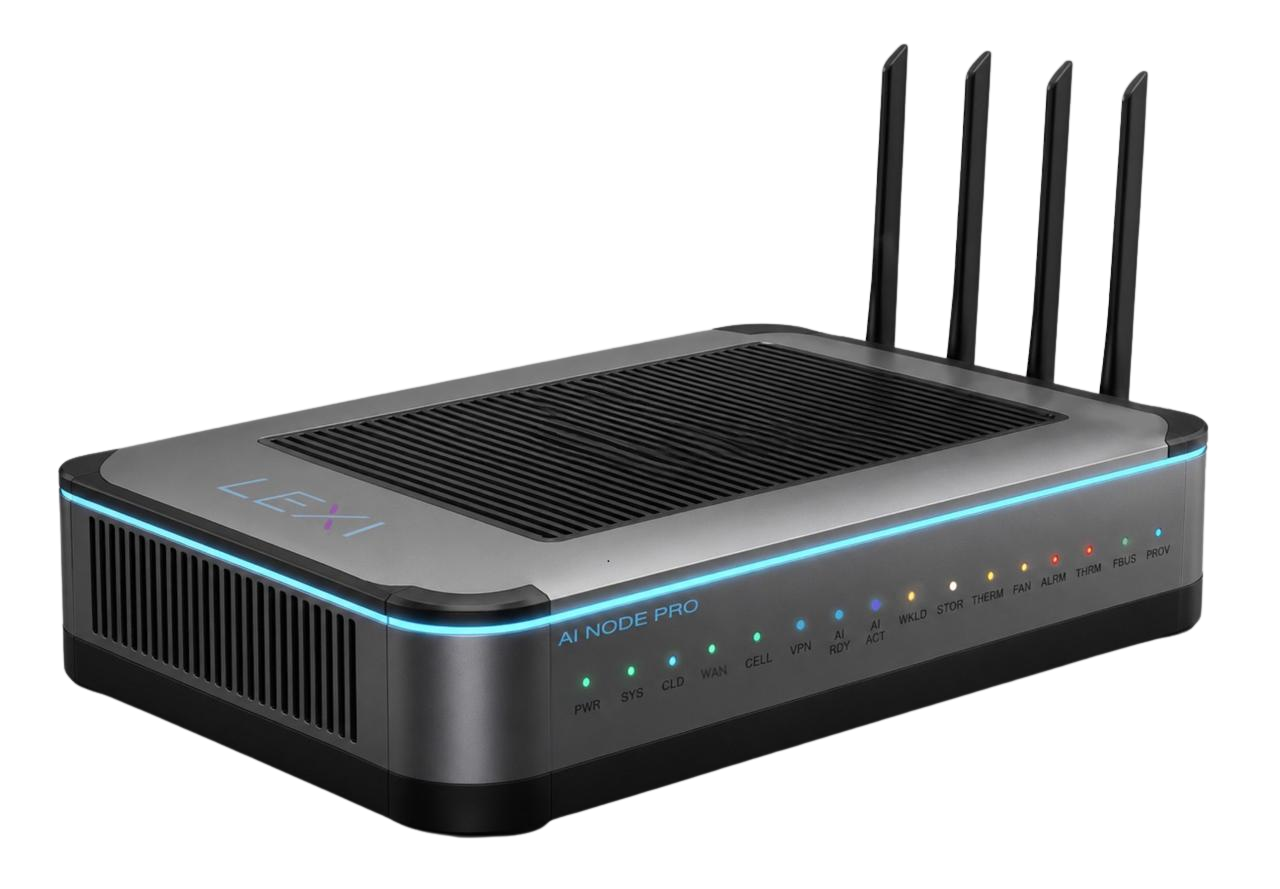
HETEROGENEOUS BUILDINGS NEED HETEROGENEOUS CONNECTIVITY
Existing buildings mix legacy equipment, wireless sensors, room devices and multiple generations of controls. LEXI lets each asset use the connectivity that fits its range, power, bandwidth and operating requirements.
Use different device networks across the same building instead of forcing every application onto one radio.
Combine long-range, mesh, local wireless and building-automation connectivity to reach equipment and spaces that are still dark.
Bring compatible applications onto the same gateway and connectivity foundation as the deployment expands.
Extend the physical reach of BAS/BMS and other platforms rather than replacing systems that already work.
MULTI-RADIO CONNECTIVITY
The LEXI Universal Building Automation Gateway supports multiple wireless technologies so the deployment can match connectivity to the device and environment.

Long-range, low-power connectivity for sensing, metering, environmental monitoring and distributed or hard-to-reach assets.

2.4 GHz mesh connectivity for compatible room, sensor and control-device ecosystems.

IP-based low-power mesh connectivity for compatible next-generation room and device ecosystems.
Sub-GHz connectivity for compatible room, control and building-device ecosystems.
Short-range connectivity for nearby sensors, commissioning and compatible mesh devices.

2.4 / 5 GHz connectivity for local-network devices and higher-bandwidth building endpoints.
CONNECT THE EQUIPMENT ALREADY IN THE BUILDING
LEXI combines wireless device networks with building-automation and equipment connectivity so legacy and newer assets can participate in the same operating environment.
Connect supported BACnet building systems and make newly digitized LEXI assets available to BACnet-based BAS/BMS environments.

Connect supported Modbus equipment for monitoring, equipment data and approved control workflows.
Extend wired Modbus equipment over a wireless path where running new long-distance data cabling is impractical or uneconomic.
Use wired Ethernet where the building already has suitable network infrastructure or where a wired connection is preferred.
ONE BUILDING, DIFFERENT NETWORKS REQUIREMENTS
| Deployment Need | Typical Connectivity | Example Building Uses |
|---|---|---|
| Long-range / low-power sensing | LoRaWAN | Meters, leaks, IAQ, environmental and distributed-site sensors |
| Room / zone device networks | Zigbee · Thread · BLE | Occupancy, thermostats, room sensors and compatible control devices |
| Security | Z-Wave | Security sensors and smart locks |
| Higher-bandwidth local devices | Wi-Fi · Ethernet | Local-network devices and data-intensive endpoints |
| Existing BAS/BMS equipment | BACnet | Plant, HVAC and building-control integration |
| Legacy wired equipment | Modbus + Wired-to-Wireless Converter | Boilers, meters, controllers and other Modbus equipment |
HETEROGENEOUS IoT CONVERGENCE
The value of multi-protocol connectivity is not simply supporting more radios. LEXI decodes and handles data at the gateway so different device networks can participate in common applications and local workflows.
Decode and process telemetry from different device networks at the same edge.
Use building context to relate events across devices and protocols instead of treating every sensor as an isolated endpoint.
Use cross-protocol events for alerts, automation and approved local actions without sending every decision to the cloud.
Feed multi-protocol building data into Gen3 local inference and correlation workflows using LEXI's NXP eIQ-based Edge AI environment.
CONNECT WHAT THE APPLICATION REQUIRES
LEXI can map the device networks, equipment interfaces and gateway architecture around the application.