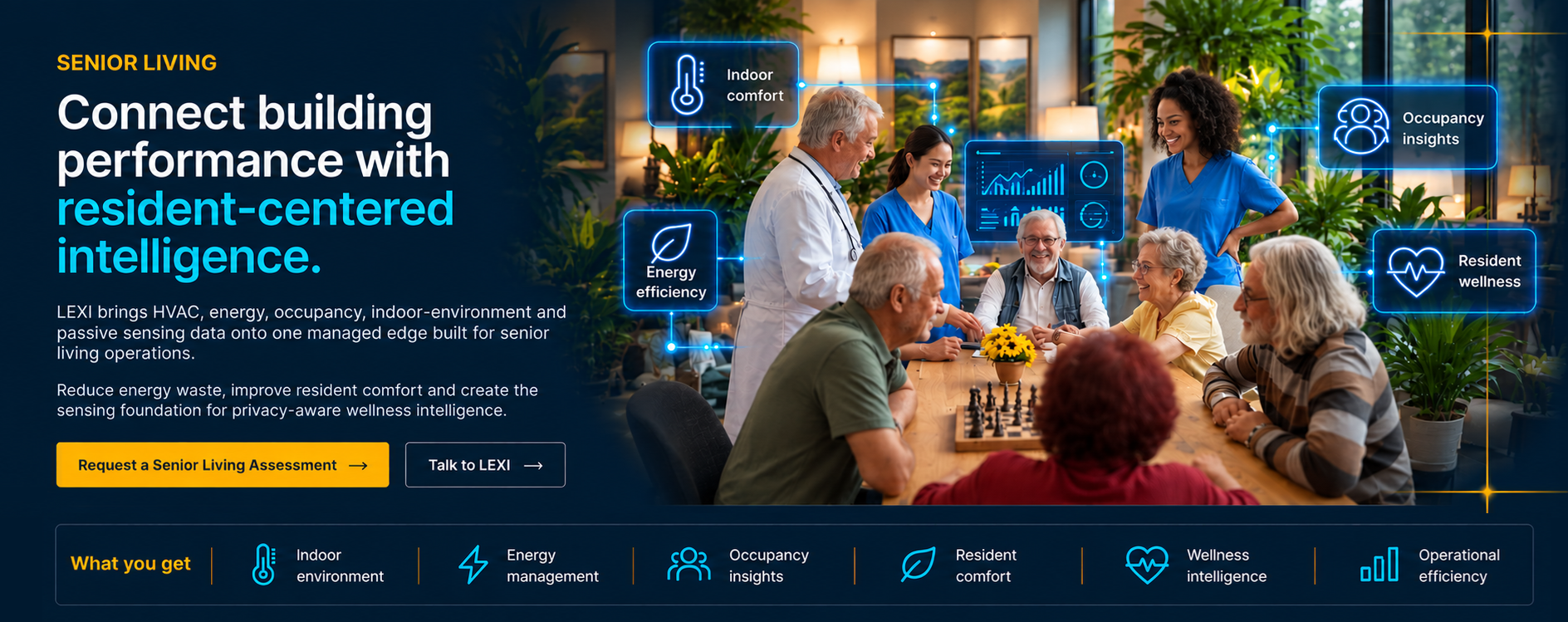
Senior living — connect building performance with resident-centered intelligence. LEXI brings HVAC, energy, occupancy, indoor-environment and passive sensing data onto one managed edge built for senior living operations. Reduce energy waste, improve resident comfort and create the sensing foundation for privacy-aware wellness intelligence. What you get: indoor environment, energy management, occupancy insights, resident comfort, wellness intelligence and operational efficiency.
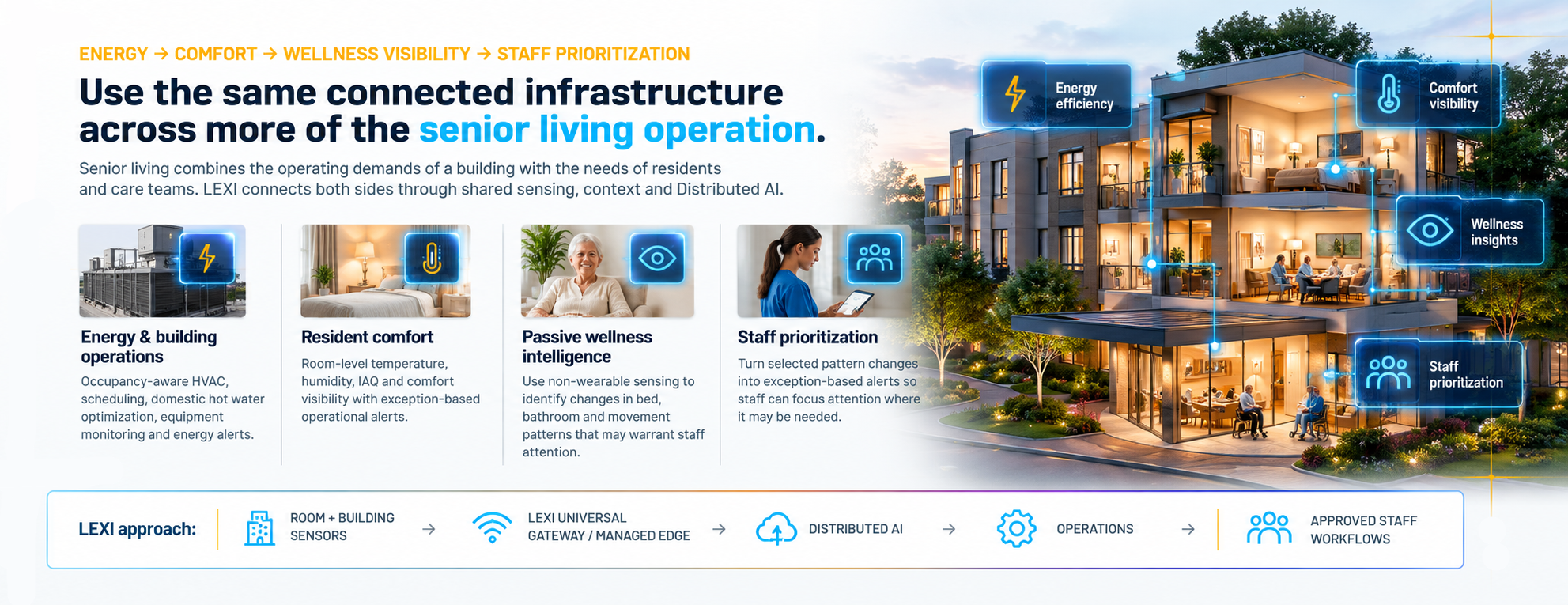
Energy, comfort, wellness visibility, staff prioritization — use the same connected infrastructure across more of the senior living operation. Senior living combines the operating demands of a building with the needs of residents and care teams. LEXI connects both sides through shared sensing, context and Distributed AI. Energy & building operations: occupancy-aware HVAC, scheduling, domestic hot water optimization, equipment monitoring and energy alerts. Resident comfort: room-level temperature, humidity, IAQ and comfort visibility with exception-based operational alerts. Passive wellness intelligence (roadmap): use non-wearable sensing to identify changes in bed, bathroom and movement patterns that may warrant staff attention. Staff prioritization (roadmap): turn selected pattern changes into exception-based alerts so staff can focus attention where it may be needed. LEXI approach: room and building sensors to the LEXI Universal Gateway / Managed Edge to Distributed AI to operations and approved staff workflows.
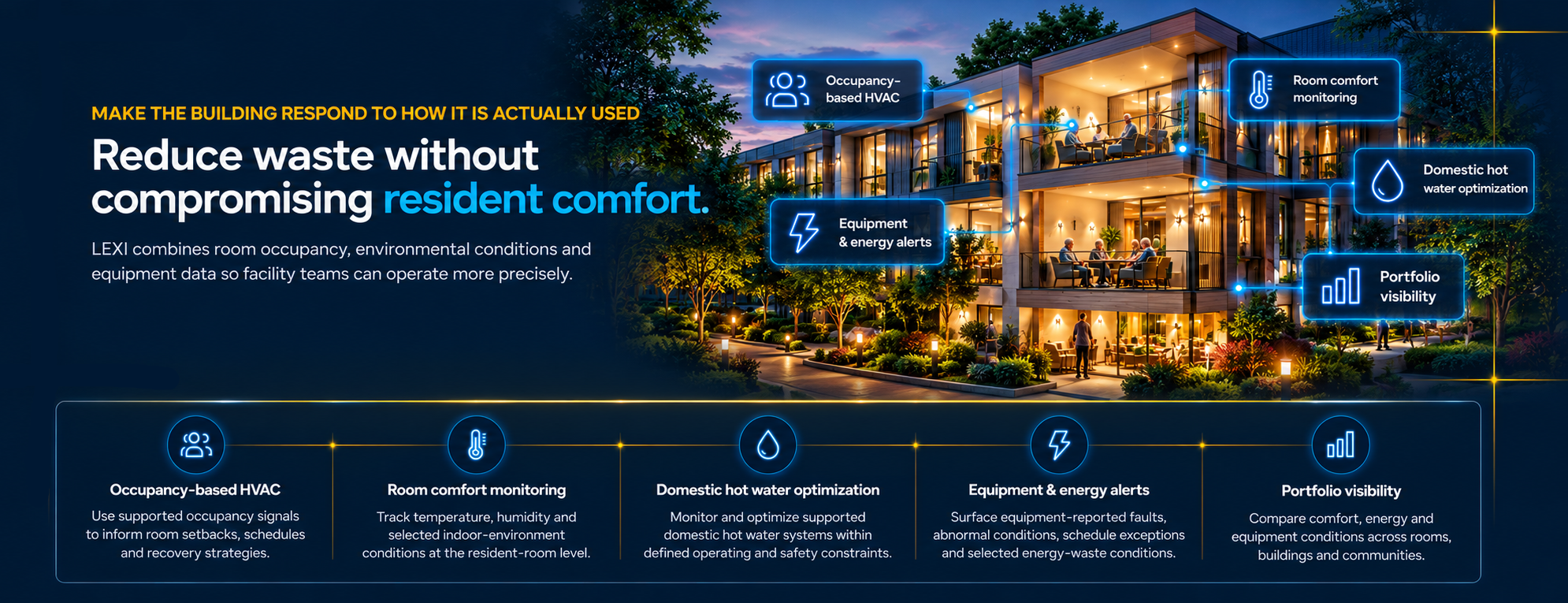
Make the building respond to how it is actually used — reduce waste without compromising resident comfort. LEXI combines room occupancy, environmental conditions and equipment data so facility teams can operate more precisely. Occupancy-based HVAC: use supported occupancy signals to inform room setbacks, schedules and recovery strategies. Room comfort monitoring: track temperature, humidity and selected indoor-environment conditions at the resident-room level. Domestic hot water optimization: monitor and optimize supported domestic hot water systems within defined operating and safety constraints. Equipment & energy alerts: surface equipment-reported faults, abnormal conditions, schedule exceptions and selected energy-waste conditions. Portfolio visibility: compare comfort, energy and equipment conditions across rooms, buildings and communities.
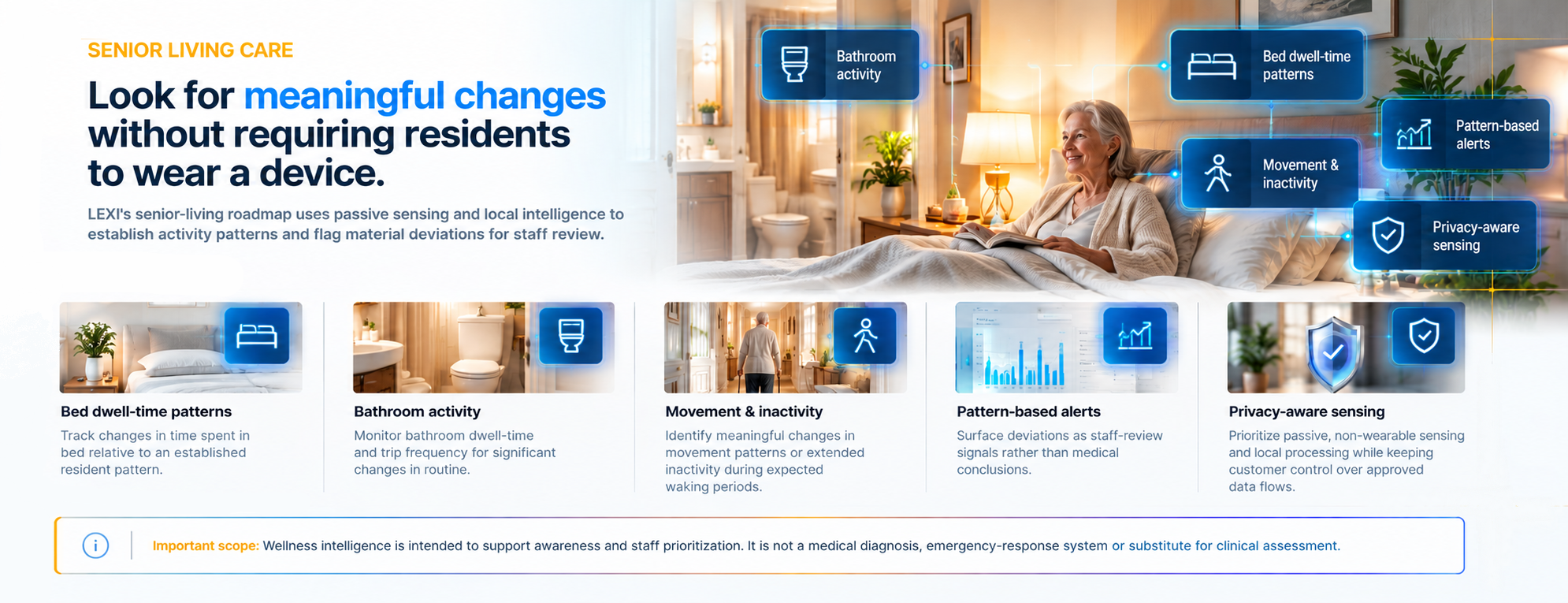
Senior living care (roadmap) — look for meaningful changes without requiring residents to wear a device. LEXI's senior-living roadmap uses passive sensing and local intelligence to establish activity patterns and flag material deviations for staff review. Bed dwell-time patterns: track changes in time spent in bed relative to an established resident pattern. Bathroom activity: monitor bathroom dwell-time and trip frequency for significant changes in routine. Movement & inactivity: identify meaningful changes in movement patterns or extended inactivity during expected waking periods. Pattern-based alerts: surface deviations as staff-review signals rather than medical conclusions. Privacy-aware sensing: prioritize passive, non-wearable sensing and local processing while keeping customer control over approved data flows. Important scope: wellness intelligence is intended to support awareness and staff prioritization; it is not a medical diagnosis, emergency-response system or substitute for clinical assessment.
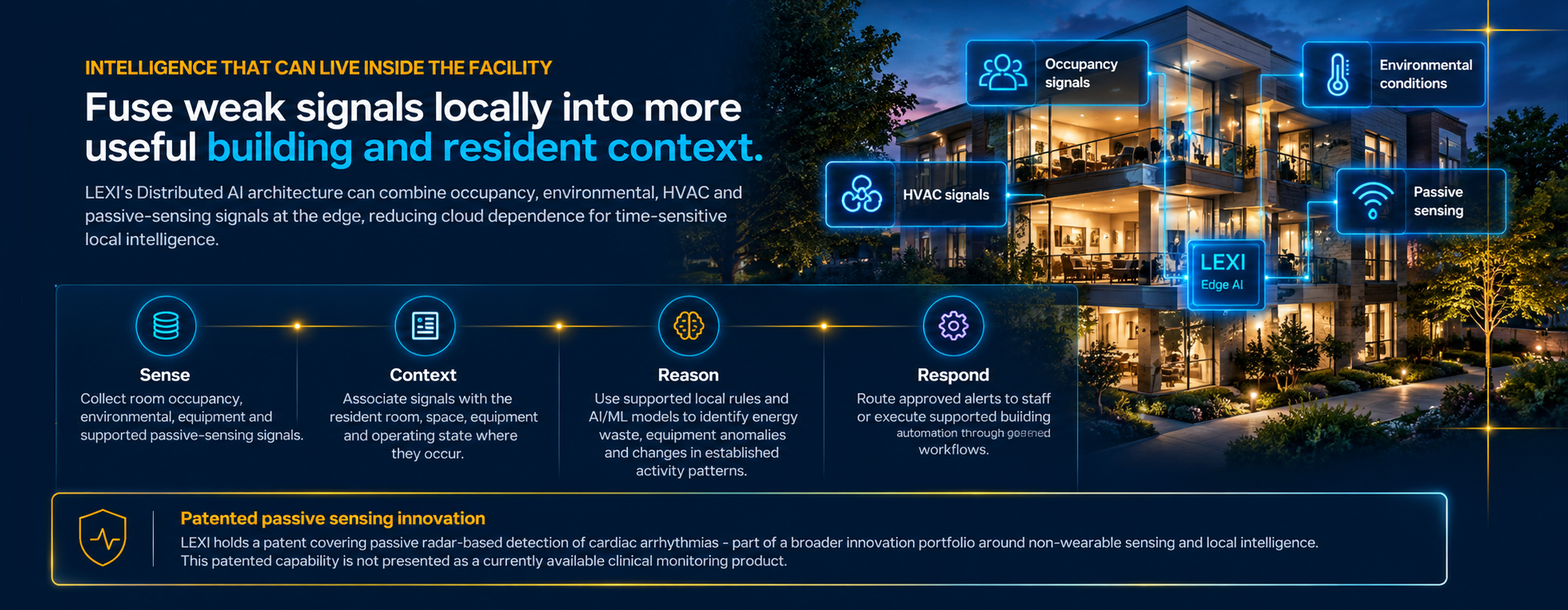
Intelligence that can live inside the facility — fuse weak signals locally into more useful building and resident context. LEXI's Distributed AI architecture can combine occupancy, environmental, HVAC and passive-sensing signals at the edge, reducing cloud dependence for time-sensitive local intelligence. Sense: collect room occupancy, environmental, equipment and supported passive-sensing signals. Context: associate signals with the resident room, space, equipment and operating state where they occur. Reason: use supported local rules and AI/ML models to identify energy waste, equipment anomalies and changes in established activity patterns. Respond: route approved alerts to staff or execute supported building automation through governed workflows. Patented passive sensing innovation: LEXI holds a patent covering passive radar-based detection of cardiac arrhythmias, part of a broader innovation portfolio around non-wearable sensing and local intelligence; this patented capability is not presented as a currently available clinical monitoring product.
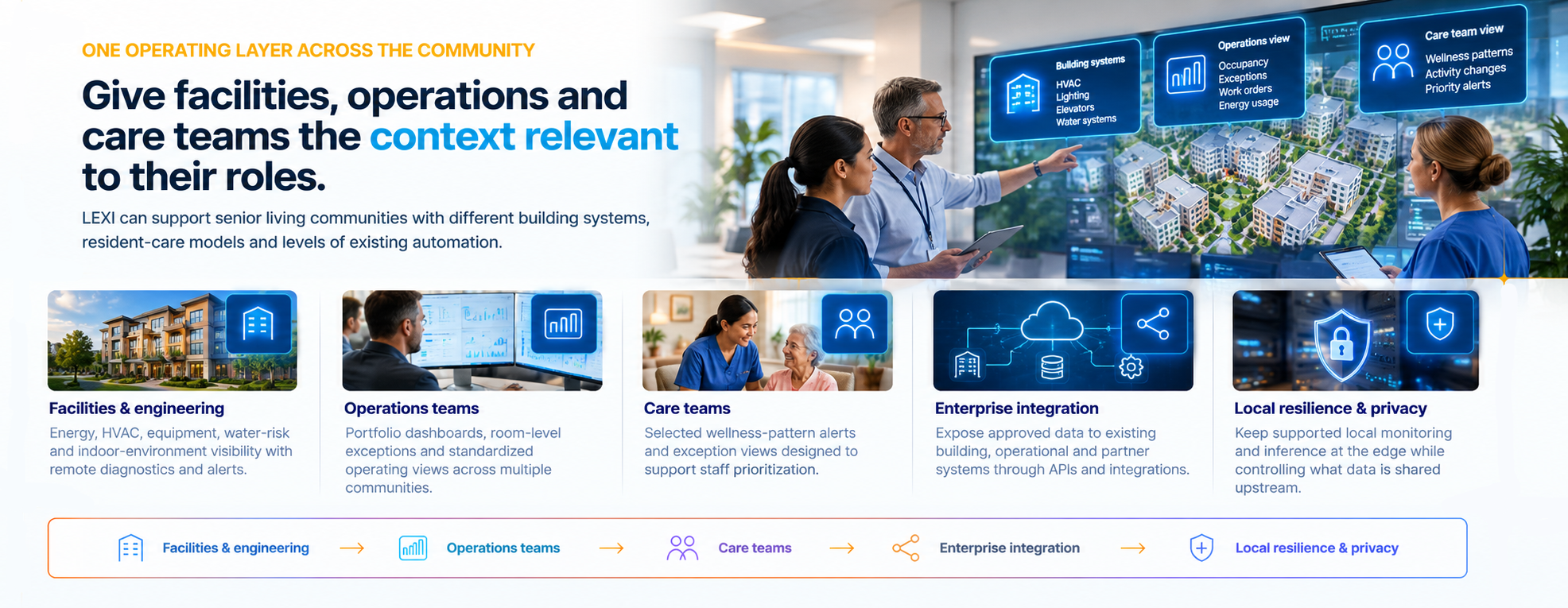
One operating layer across the community — give facilities, operations and care teams the context relevant to their roles. LEXI can support senior living communities with different building systems, resident-care models and levels of existing automation. Facilities & engineering: energy, HVAC, equipment, water-risk and indoor-environment visibility with remote diagnostics and alerts. Operations teams: portfolio dashboards, room-level exceptions and standardized operating views across multiple communities. Care teams (roadmap): selected wellness-pattern alerts and exception views designed to support staff prioritization. Enterprise integration: expose approved data to existing building, operational and partner systems through APIs and integrations. Local resilience & privacy: keep supported local monitoring and inference at the edge while controlling what data is shared upstream.
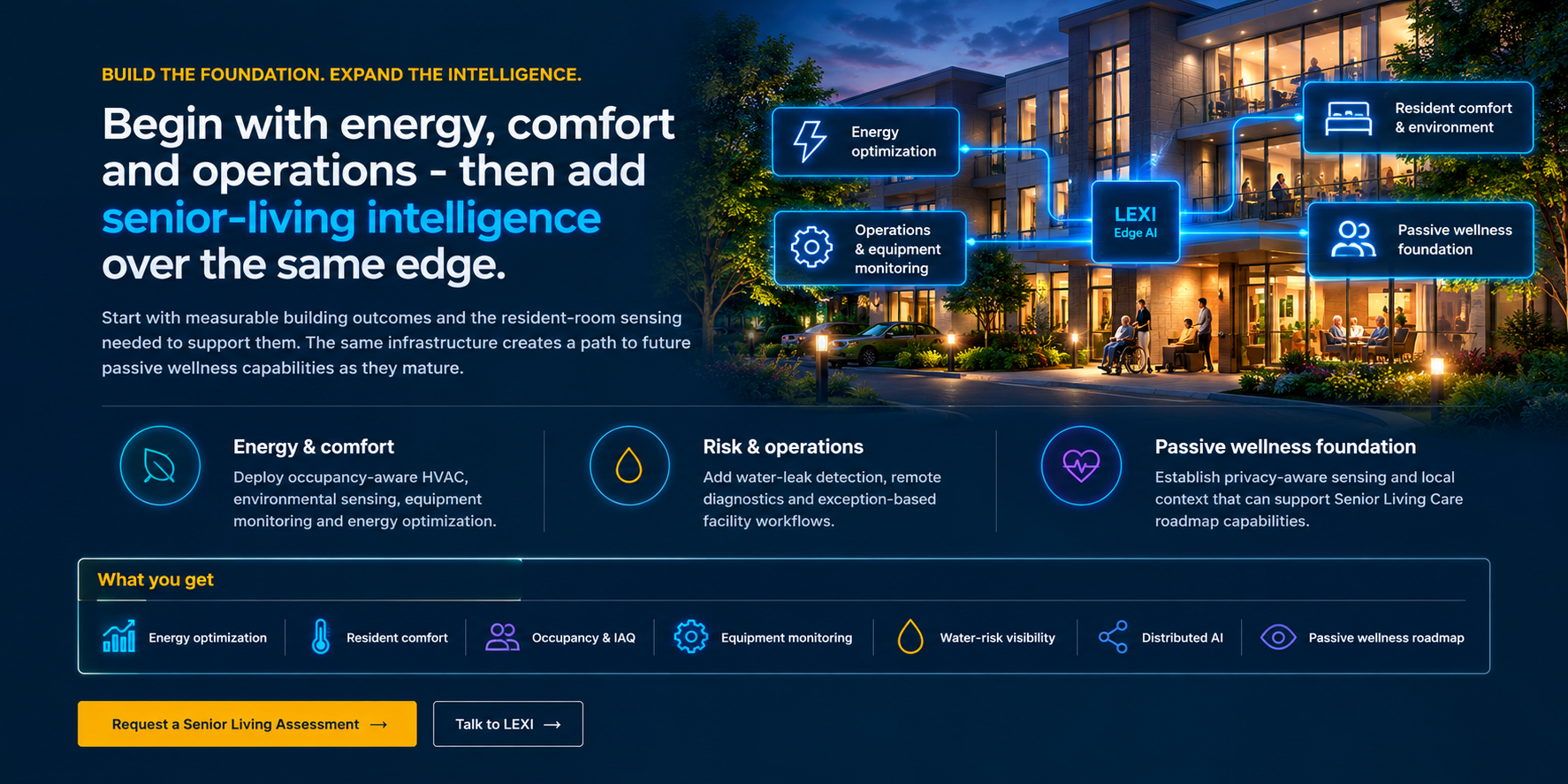
Build the foundation, expand the intelligence — begin with energy, comfort and operations, then add senior-living intelligence over the same edge. Start with measurable building outcomes and the resident-room sensing needed to support them; the same infrastructure creates a path to future passive wellness capabilities as they mature. Energy & comfort: deploy occupancy-aware HVAC, environmental sensing, equipment monitoring and energy optimization. Risk & operations: add water-leak detection, remote diagnostics and exception-based facility workflows. Passive wellness foundation: establish privacy-aware sensing and local context that can support Senior Living Care roadmap capabilities. What you get: energy optimization, resident comfort, occupancy & IAQ, equipment monitoring, water-risk visibility, Distributed AI and passive wellness roadmap. Related links: Energy Optimization & Managed Power; Healthy Buildings & Indoor Environment; Occupancy & People Counting; Water Damage Prevention & Mitigation; Distributed AI & Edge Intelligence; Safety, Risk & Specialty Care.